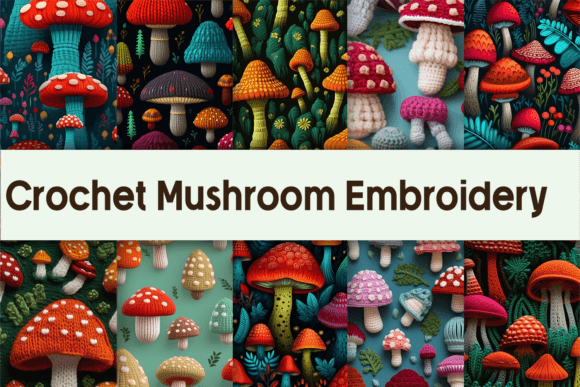
Crochet Mushroom Embroidery Background Review
As an embroidery designer who has spent years digitizing files for small businesses, I have learned that the difference between a hobbyist project and a professional brand asset often comes down to visual consistency. When I first encountered the Crochet Mushroom Embroidery Background, my immediate reaction was not just about aesthetics, but about utility. This is not merely a decorative image; it is a versatile graphic resource that bridges the gap between digital design and tangible handmade product appeal. For shop owners looking to elevate their small business merch, understanding how this asset translates from screen to fabric is crucial.
First Impressions: Visual Personality and Brand Fit
The title itself suggests a specific texture and mood. The combination of "crochet" and "mushroom" evokes a sense of warmth, nostalgia, and organic charm. In the current market, where customers are increasingly drawn to artisanal and cozy aesthetics, this design hits the mark. It feels friendly, rustic, and distinctly handmade. However, as a designer, I look beyond the vibe to the technical execution. The description notes that you receive 10 PNG files at 4000x4000px with 300 DPI resolution. This high resolution is vital. It means the design assets are crisp enough to be used not just for web banners, but as the foundation for creating printable mockup presentations or even as a reference for manual digitizing if one chooses to convert the visual concept into a stitch file.
For brands in the Crafts and Graphics sectors, this background offers a unique texture that mimics the looped structure of yarn. This is particularly effective for businesses selling eco-friendly goods, baby items, or comfort foods. It signals to the customer that care and tactile quality are central to the brand identity.
Real-World Applications for Small Business Merchandise
Let us move beyond theory and discuss how the Crochet Mushroom Embroidery Background performs in actual commercial scenarios. I recently advised a local boutique café on updating their staff uniforms. They wanted something that felt approachable yet professional. We used elements from this graphic collection to create a subtle chest accent on their aprons. Because the design has a textured, woven appearance, it complemented the heavy cotton of the aprons without looking out of place. It served as a perfect apron embroidery reference, guiding the choice of thread colors to match the warm, earthy tones of the coffee shop’s interior.
Another excellent use case is in custom apparel for creative studios or florists. Imagine a tote bag made from canvas. Using this background as a full-print sublimation design before adding a simple embroidered logo on top creates a layered, premium look. Alternatively, for those who digitize their own files, this PNG can serve as the underlay or background texture for a larger embroidered patch. The mushroom motif is trendy, but the crochet texture gives it a timeless, classic feel that does not date quickly. This longevity is essential for brand identity; you do not want your merchandise looking outdated six months after production.
For Etsy sellers and online creators, these high-resolution files are invaluable for creating digital embroidery file previews. You can overlay your actual stitch designs onto this background in Photoshop to show customers how their finished product might look in a cozy, styled setting. This increases buyer engagement and helps visualize the finished product before purchase.
Technical Considerations and Design Limitations
While the aesthetic is strong, we must address the technical realities of applying such a detailed background to physical goods. It is important to clarify that the product includes PNG files, which are raster images, not vector or native machine embroidery formats like PES or DST. Therefore, you cannot simply load this file into an embroidery machine. Instead, it serves as a design template, a print element, or a reference for digitizers.
If you plan to use this as a reference for creating a machine embroidery design, pay close attention to stitch density. A true crochet texture involves many small, overlapping loops. If you attempt to replicate this exactly with thread on a small area, such as a cap front or a small patch, the result may become stiff and bulky. High stitch density on curved surfaces like hats can cause puckering. I recommend simplifying the texture when scaling down. Use the PNG to guide your color placement and general shape, but reduce the number of satin stitches or fills to maintain flexibility.
Furthermore, consider the fabric texture. This design works best on smooth, tight-weave fabrics like twill, poplin, or high-quality cotton blends. On loose-weave linens or fuzzy fleece, the intricate details of the mushroom and crochet pattern may get lost. Always test on real fabric before committing to a large production run. Use a appropriate stabilizer to support the weight of the threads, especially if you are filling large areas with color.
Enhancing Brand Identity and Customer Trust
Consistency is key to building trust. When a customer sees the same visual language on your website, your packaging, and your tote bag design, it reinforces professionalism. The Crochet Mushroom Embroidery Background provides a cohesive visual thread. For example, a pet brand could use this background on their social media graphics and then feature a simplified version of the mushroom on their dog bandanas. This cross-platform consistency makes the brand memorable.
Moreover, using high-quality, thoughtful graphics signals that you value quality. Customers associate the effort put into branding with the effort put into the product itself. A well-designed cap embroidery or a neatly printed label featuring this aesthetic suggests that the item inside is also crafted with care. It elevates the perceived value of your goods, allowing for better pricing power in a competitive market.
Practical Designer Notes for Implementation
Before you integrate this into your workflow, here are my top recommendations:
- Test in Black and White: Convert the PNG to grayscale first. This helps you see if the contrast is strong enough. If the details disappear in black and white, they will likely get lost in thread on dark uniforms.
- Check Scale: Print the image at the size you intend to embroider or print. Does it look cluttered? Simplify if necessary.
- Verify Licensing: While the description mentions it is perfect for POD and commercial use, always double-check the specific license terms provided by the seller to ensure it covers your specific business model, especially for mass-produced commercial embroidery projects.
- Mockup Creation: Use the 4000x4000px files to create realistic mockups. Place your actual logo over the background to see how they interact. Ensure there is enough negative space so your brand name remains legible.
- Thread Color Matching: If digitizing based on this image, pull physical thread cards. Screen colors rarely match thread colors exactly. Aim for harmony rather than an exact pixel-perfect match.
In conclusion, the Crochet Mushroom Embroidery Background is a powerful tool for designers and small business owners who understand its proper application. It is not just a pretty picture; it is a strategic asset for building a warm, authentic, and professional brand presence. By respecting the technical limits of embroidery and leveraging the high resolution for smart marketing materials, you can turn this graphic into a cornerstone of your merchandise strategy.